Introduction
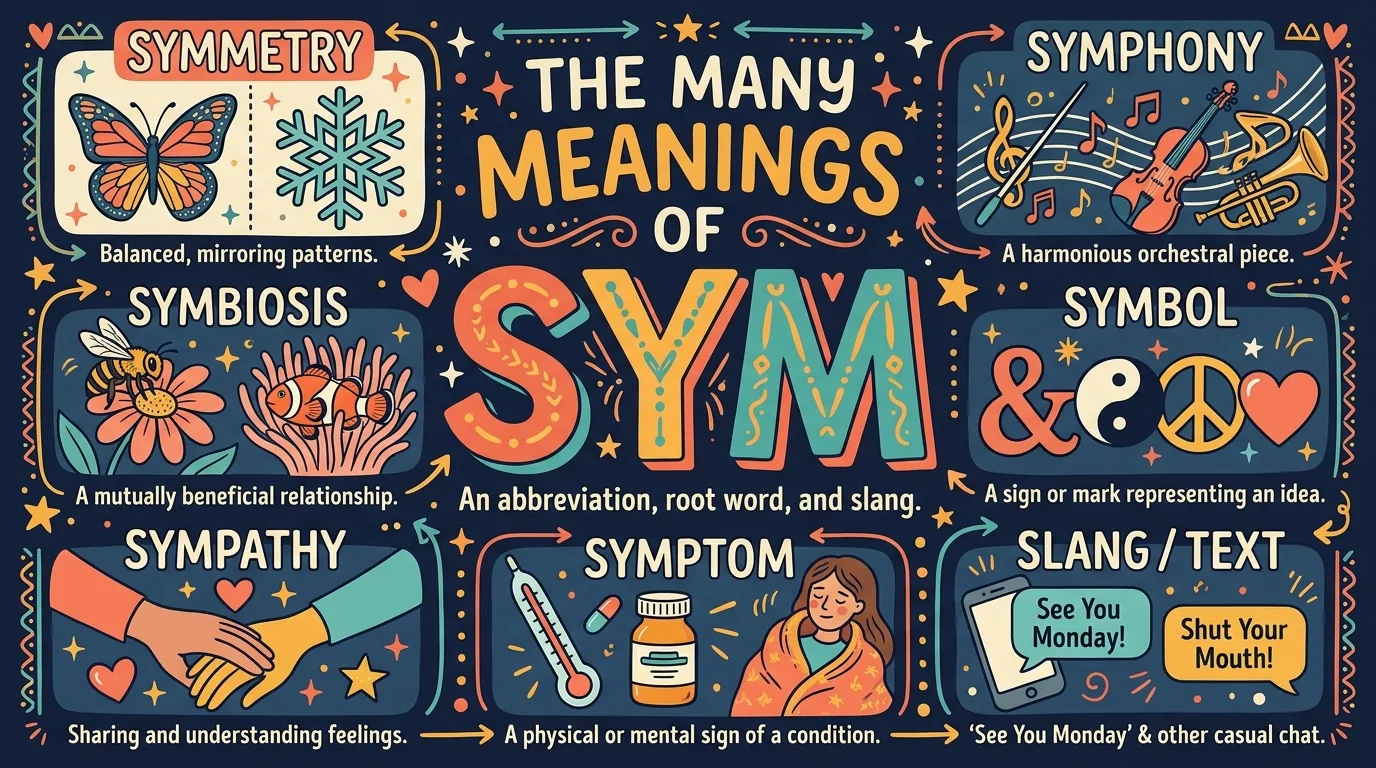
SYM most commonly means “Shut Your Mouth” in internet slang and text messages. People use it to tell someone to stop talking, express disbelief, or react dramatically to surprising information.
However, SYM does not always sound rude. Among close friends, it can be a playful expression of shock, excitement, or disbelief. During an argument, the same abbreviation can sound disrespectful or aggressive.
For example:
- Friend: “I just found out your crush likes you!”
- You: “SYM 😭😂”
Here, SYM expresses surprise rather than an actual demand to be quiet.
Depending on the conversation, SYM can also have other interpretations, including “Suck Your Mom” or “So You Mad.” It may also appear as an abbreviation in technical contexts.
The surrounding conversation, relationship, and tone are essential for understanding its intended meaning.
Quick Answer: SYM Meaning at a Glance
| Term | Meaning |
| SYM | Shut Your Mouth |
| Category | Internet slang / abbreviation |
| Main usage | Text messages and social media |
| Tone | Playful, sarcastic, or rude |
| Common audience | Casual online conversations |
| Alternative meaning | Suck Your Mom |
| Another reported meaning | So You Mad |
The most useful interpretation in ordinary slang conversations is “Shut Your Mouth,” but context should always guide your understanding.
What Does SYM Mean?+2
What Does SYM Stand For?
SYM is an abbreviation formed from the first letters of three words:
- S: Shut
- Y: Your
- M: Mouth
Instead of typing the complete expression, someone can simply write SYM.
This makes it a short, direct reaction in casual digital communication. Its meaning changes slightly depending on how someone uses it.
For instance:
Playful conversation:
Person A: “I accidentally sent my embarrassing photo to the entire group.”
Person B: “SYM 😂”
Serious conversation:
Person A: “You need to listen to what I’m saying.”
Person B: “SYM.”
The first example sounds like teasing, while the second sounds dismissive.
Other Possible Meanings of SYM
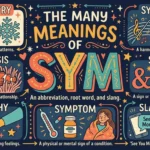
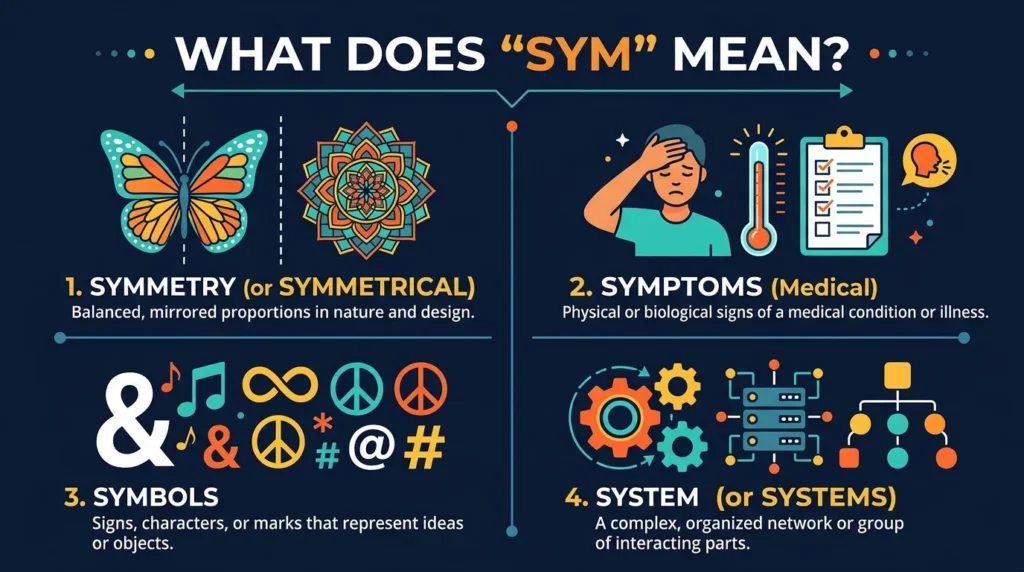
Although “Shut Your Mouth” is the main slang interpretation, SYM has other reported meanings. These should not automatically be treated as equally common.
| SYM Meaning | Explanation | Context |
| Shut Your Mouth | Telling someone to stop talking | Internet slang |
| Suck Your Mom | A vulgar insult | Offensive conversations |
| So You Mad | A sarcastic challenge | Arguments and online banter |
| Sympathy | Informal shorthand for sympathy | Personal conversations |
| Symmetric | Shortened technical reference | Mathematics and design |
| Symbol | Abbreviation in specialist contexts | Computing and documentation |
Community-submitted slang definitions also document variations such as “So You Mad” and vulgar interpretations. These are informal usages rather than universally established definitions.
Urban Dictionary+2
How Is SYM Used in Text Messages?
People use SYM in different situations, depending on their relationships and the emotions behind their messages.
Here are the most common ways it appears in everyday conversations.
1. SYM as a Playful Reaction
Friends sometimes use SYM when someone shares unbelievable, embarrassing, or unexpected information.
Example:
- Alex: “I accidentally called my teacher Mom.”
- Sam: “SYM 😭”
Meaning: Sam is jokingly reacting to the embarrassing situation.
2. SYM to Tell Someone to Stop Talking
Someone might use SYM when they are annoyed or do not want to hear Another Person’s comments.
Example:
- Person A: “You always make the same mistake.”
- Person B: “SYM. I’m tired of hearing this.”
Meaning: Person B wants the other person to stop talking.
3. SYM to Express Disbelief
SYM can communicate surprise when someone says something difficult to believe.
Example:
- Friend: “I met my favorite celebrity yesterday!”
- You: “SYM WHAT?! 😭”
Meaning: You are shocked and want to hear more.
4. SYM as an Insult
In an argument, SYM can become an offensive expression rather than a joke.
Example:
- Person A: “You should apologize for what happened.”
- Person B: “SYM. Nobody asked you.”
Meaning: Person B is being disrespectful and dismissive.
5. SYM as a Sarcastic Comeback
Some people use SYM to challenge someone who seems jealous, angry, or unnecessarily critical.
Example:
- Person A: “You think you’re better than everyone.”
- Person B: “SYM, so you mad?”
Meaning: The sender is responding sarcastically rather than having a serious discussion.
SYM Meaning on Different Social Media Platforms
The abbreviation can appear across messaging apps, social networks, and online communities. However, there is no reliable evidence that every platform has a separate official definition for SYM.
What Does SYM Mean on Snapchat?
On Snapchat, SYM can mean “Shut Your Mouth” when someone reacts to a surprising snap, funny story, or unexpected message.
Example:
- Friend: “I saw your crush at the mall.”
- You: “SYM 😂”
It can be playful between friends, but it may sound rude if the conversation is already tense.
What Does SYM Mean on TikTok?
On TikTok, SYM may appear in comments and conversations as a short reaction to something surprising, funny, or controversial.
Example:
Someone posts an unexpected relationship confession.
Comment: “SYM 😭”
The commenter is expressing shock or disbelief.
What Does SYM Mean on Instagram?
On Instagram, SYM may appear in direct messages, comments, and group conversations.
Example:
- Friend: “Your old photos are going viral.”
- You: “SYM no way!”
It works as an informal reaction, although the sender’s intended Tone Depends on the context.
What Does SYM Mean on WhatsApp?
On WhatsApp, SYM is generally understood through the conversation surrounding it.
Example:
- Friend: “I told your secret to everyone.”
- You: “SYM bro 😭”
Here, the expression can communicate playful frustration.
What Does SYM Mean in Gaming Chats?
In gaming conversations, SYM may be used as a quick way to tell another player to stop talking.
Example:
Player 1: “You only won because I wasn’t trying.”
Player 2: “SYM and play.”
In competitive environments, it can sound confrontational.
Is SYM Rude or Friendly?
SYM can be either friendly or rude. The difference depends on the relationship between the people communicating and the situation.
| Situation | Intended Tone | Interpretation |
| Close friends joking | Playful | Stop it! |
| Unexpected gossip | Surprised | No way! |
| Heated argument | Aggressive | Stop talking |
| Sarcastic response | Mocking | Be quiet |
| Online disagreement | Disrespectful | I don’t want to hear you |
Important: If someone sends SYM with laughing or crying emojis, they may be joking. Without those signals, especially during an argument, it is safer not to assume they are being friendly.
SYM Examples in Everyday Conversations
Understanding examples makes it easier to Recognize how people use SYM in different situations.
| Conversation | Meaning |
| “I saw you dancing yesterday.” — “SYM 😂” | Playful embarrassment |
| “Your crush asked about you.” — “SYM!” | Excitement and surprise |
| “You are always late.” — “SYM.” | Stop talking |
| “I know what you did.” — “SYM bro 😭” | Nervous or playful reaction |
| “You’re jealous of me.” — “SYM 😂” | Sarcastic comeback |
| “Nobody likes your attitude.” — “SYM.” | Aggressive response |
| “I have some crazy news.” — “SYM, tell me!” | Excited disbelief |
| “You failed the easiest test.” — “SYM 💀” | Mocking or teasing |
These examples illustrate possible interpretations rather than fixed rules. A person’s tone and the surrounding messages matter more than the abbreviation alone.
How to Respond When Someone Says SYM
Your response should depend on whether the sender is joking, expressing frustration, or insulting you.
Here are some natural replies.
Funny Responses
If a friend uses SYM playfully, keep the conversation light.
- “Make me 😂”
- “I can’t help it!”
- “You heard me!”
- “Not today 😭”
- “Okay, okay, I’m done!”
- “Why are you so dramatic?”
Friendly Responses
If someone is joking around, you can respond casually.
- “Haha, I’m just saying!”
- “You know I’m right.”
- “Relax, buddy!”
- “Don’t take it seriously.”
- “I’m only joking!”
Sarcastic Responses
If the conversation is full of playful teasing, try:
- “Someone’s getting emotional!”
- “Did I say something wrong?”
- “Truth hurts, huh?”
- “You’re too funny!”
- “Stay mad 😂”
Serious Responses
If SYM feels disrespectful, you do not need to respond aggressively.
- “There’s no need to be rude.”
- “I’m just trying to explain.”
- “Let’s talk respectfully.”
- “You can disagree without being disrespectful.”
- “I’ll continue this conversation when you’re ready.”
The best response is one that matches the situation without unnecessarily escalating the conversation.
What Does SYM Mean From a Guy?
When a guy sends SYM, it usually depends on the conversation rather than his gender.
For example:
- If he sends “SYM 😂” after you tease him, he May Be Joking.
- If he sends “SYM” during an argument, he may be annoyed.
- If he sends “SYM, no way!” after hearing surprising news, he may be expressing disbelief.
SYM is not automatically a romantic or flirty abbreviation. Look at his overall communication style before interpreting it.
What Does SYM Mean From a Girl?
When a girl uses SYM, it can communicate playful embarrassment, surprise, sarcasm, or irritation.
Examples:
- “SYM 😭 you’re embarrassing me!”
- “SYM, I already know!”
- “Girl, SYM 😂”
These messages may be friendly teasing, but the context determines the actual intention.
It is better not to assume romantic interest or anger based on three letters alone.
Is SYM Appropriate for Professional Conversations?
Generally, no. SYM is informal internet slang and can easily be misunderstood in professional communication.
For example, sending “SYM” to a manager, teacher, customer, or colleague may sound disrespectful.
Consider these clearer alternatives:
| Instead of SYM | Use This |
| Shut Your Mouth | Please let me finish. |
| Stop talking | Could we pause for a moment? |
| I disagree | I see things differently. |
| Be quiet | Could you give me a moment? |
| That’s unbelievable | That’s surprising! |
Using complete sentences helps maintain a respectful and professional tone.
Similar Slang Terms You Should Know
If you frequently communicate through text messages or social media, you may encounter other abbreviations that express similar emotions.
| Slang | Meaning |
| STFU | Shut The F*** Up |
| STFUH | Shut The F*** Up, often with an added informal ending |
| SHH | Be quiet |
| ZIP IT | Stop talking |
| FR | For Real |
| BRUH | Expression of disbelief or frustration |
| OMG | Oh My God |
| WTF | What The F*** |
| SMH | Shaking My Head |
| ISTG | I Swear To God |
Some of these expressions are more offensive than others. Always consider the audience before using them.
People Also Ask
SYM most commonly means “Shut Your Mouth” in informal texting slang. It can be used playfully between friends or aggressively during disagreements. The surrounding conversation helps identify the intended tone.
In internet slang, SYM generally stands for “Shut Your Mouth.” Other reported interpretations include “Suck Your Mom” and “So You Mad,” depending on the online community.
Yes. “Shut Your Mouth” is the most commonly reported slang expansion of SYM. People use it to tell someone to stop talking or react to something surprising.
SYM is not necessarily a swear word, but it can sound disrespectful. Its vulgar alternative, “Suck Your Mom,” is offensive. Consider the context before using it.
On Snapchat, SYM can mean “Shut Your Mouth.” Friends may use it as a playful response to surprising messages, jokes, or embarrassing stories.
Conclusion
SYM most commonly stands for “Shut Your Mouth” in texting and internet slang. It can express playful disbelief, teasing, sarcasm, or genuine frustration depending on the conversation.
You may also encounter alternative interpretations, such as “Suck Your Mom” or “So You Mad.” These variations demonstrate why context matters when interpreting online abbreviations.
Whether someone sends SYM on Snapchat, Instagram, TikTok, or WhatsApp, consider the surrounding messages, emojis, and relationship before deciding what they mean.
If you are unsure, asking the sender directly is always better than making the wrong assumption.