Introduction
Have you ever received a message saying “Goodnight, luv” or “I luv you” and wondered what the sender really meant? The word may look simple, but its meaning can change depending on the person, relationship, and conversation.
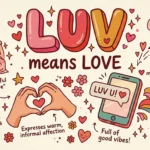
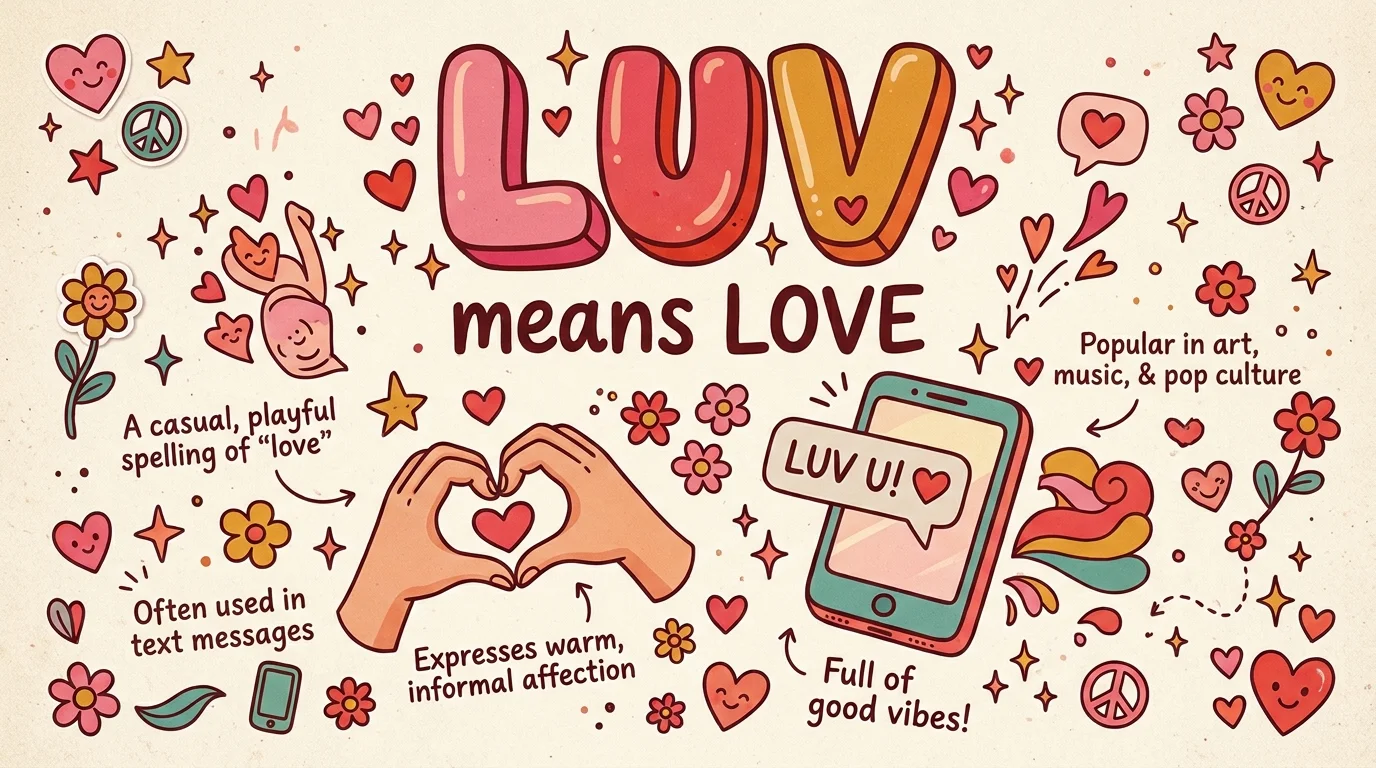
LUV means “love.” It is an informal, playful, and affectionate way of spelling the word “love” in text messages, online chats, and social media conversations. People use it to express romantic feelings, friendship, appreciation, kindness, or general affection.
For example:
- “I luv you so much!” means “I love you so much!”
- “Thanks, luv!” is a friendly way to show appreciation.
- “I luv this song!” means “I really love this song!”
Unlike formal expressions, LUV usually creates a relaxed and casual tone. However, it does not always indicate romantic interest. Understanding the relationship and surrounding conversation helps you identify the sender’s actual intention.
What Does LUV Mean?
LUV is a nonstandard spelling of the English word “love.” It represents the way the word sounds when spoken and is commonly used in informal communication.
According to major dictionaries, LUV can function as an informal spelling of love and, particularly in British English, an affectionate way to address someone.
Collins English Dictionary+2
People commonly use it to communicate:
- Romantic affection: Expressing love toward a boyfriend, girlfriend, or partner.
- Friendship: Showing care and appreciation toward close friends.
- Family affection: Sending warm messages to parents, siblings, and relatives.
- Appreciation: Thanking someone or expressing gratitude.
- Playfulness: Making a conversation feel cute, relaxed, or friendly.
For instance, if someone texts “Sending you lots of luv,” they are expressing affection and positive feelings without necessarily suggesting a romantic relationship.
What Does LUV Mean in Texting?
In texting, LUV means “love” and is commonly used as a shorter, more casual alternative to the traditional spelling.
It makes messages feel personal, warm, and conversational. Instead of typing a more formal expression, people use LUV to communicate affection quickly.
Here are some common texting examples:
| Text message | Actual meaning |
| I luv you | I love you |
| Luv ya! | Love you! |
| Sending luv | Sending affection |
| Night, luv | Goodnight, dear |
| Lots of luv | Lots of love |
| Luv this! | Really love this! |
| Stay blessed, luv | A warm, caring expression |
Important: LUV does not have one fixed emotional meaning. A friend might use it casually, while a romantic partner might use it to express genuine affection.
Different Meanings of LUV in Conversations
Although LUV generally means love, its emotional meaning depends on the situation.
Here are five common interpretations.
1. Romantic Love
When someone uses LUV while talking about a romantic relationship, it may express attraction, emotional closeness, or genuine love.
Example:
“Can’t wait to see you tonight, luv ❤️”
This message sounds affectionate and may carry romantic meaning, especially when exchanged between partners.
2. Friendly Affection
Friends often use LUV to show appreciation without suggesting romantic feelings.
Example:
“You’re the best, luv! Thanks for helping me.”
Here, the sender is expressing gratitude and friendship.
3. Family Love
Family members may use LUV to communicate warmth and care.
Example:
“Take care of yourself, luv. Love you!”
This is a natural way to express affection toward someone close.
4. Appreciation and Gratitude
Sometimes LUV is simply a friendly expression used to make a thank-you message sound warmer.
Example:
“Thank you for the beautiful gift, luv!”
The sender is showing appreciation rather than necessarily expressing romantic interest.
5. Casual Greeting or Form of Address
In some English-speaking communities, particularly in Britain, LUV is used when addressing another person.
Example:
“Are you alright, luv?”
This can be a friendly or familiar greeting. It does not automatically suggest attraction.
Is LUV Romantic or Friendly?
LUV can be both romantic and friendly. The word itself does not reveal whether someone has romantic feelings.
The most important factors are your relationship with the sender, their usual communication style, and the context of the conversation.
| Situation | Possible meaning | Romantic interest? |
| Your boyfriend says “LUV U” | Romantic affection | Likely |
| Your best friend says “Thanks, luv” | Friendship and appreciation | Usually no |
| A stranger says “Alright, luv?” | Casual friendliness | Usually no |
| Your crush says “Goodnight, luv ❤️” | Possible flirting or affection | Possible |
| Your mother says “Love you, luv” | Family affection | No |
| Your partner says “Miss you, luv” | Emotional closeness | Likely |
How to understand the intention: Never judge someone’s feelings based on one word alone. Consider their behavior, the conversation, and whether they Regularly use affectionate language with other people.
What Does LUV Mean From a Guy?
When a guy texts LUV, he may be expressing affection, friendship, appreciation, or romantic interest.
Its meaning depends on how he communicates with you and the type of relationship you share.
Here are some possible interpretations:
1. He likes you: If he uses LUV alongside compliments, affectionate messages, and personal attention, he may be showing romantic interest.
2. He feels comfortable with you: A guy might use LUV because he considers you someone close and enjoys talking to you.
3. He is being friendly: Some guys naturally use affectionate expressions with friends without any romantic intention.
4. He is flirting: Messages like “Miss you, luv 😘” or “Goodnight, luv ❤️” can suggest flirtation depending on the relationship.
5. It is his normal texting style: Some people use LUV with almost everyone, making it less meaningful as a romantic signal.
Example:
Guy: “Hey, luv. How was your day?”
Possible meaning: He is using an affectionate greeting, but you need more context to determine whether he is flirting.
What Does LUV Mean From a Girl?
When a girl sends LUV, she may be expressing affection, appreciation, friendship, or romantic feelings.
It can make a message sound sweeter and more personal.
Common examples include:
- “Luv you, bestie!” — Friendly affection.
- “Goodnight, luv ❤️” — Warm and potentially romantic.
- “Aww, luv this!” — Appreciation or excitement.
- “Take care, luv!” — Kindness and concern.
- “Miss you, luv 😘” — Affection that may be romantic or playful.
If a girl frequently sends affectionate messages, compliments you, and makes an effort to spend time with you, she may be interested. However, LUV alone is not proof of romantic attraction.
LUV vs. LOVE: What’s the Difference?
It and LOVE have essentially the same basic meaning, but they can create different impressions.
LUV is an informal spelling, while LOVE is the standard English spelling.
| Feature | LUV | LOVE |
| Meaning | Love | Love |
| Spelling | Informal | Standard |
| Tone | Casual and playful | Neutral, sincere, or emotional |
| Common use | Texts and casual chats | Everyday and formal writing |
| Emotional impression | Can feel lighthearted | Can feel more direct |
| Professional writing | Generally unsuitable | Appropriate depending on context |
Which One Sounds More Romantic?
LOVE can sound more direct and emotionally serious, while LUV often sounds playful and relaxed.
For example:
- “I luv you” sounds casual and affectionate.
- “I love you” can sound more sincere and emotionally deliberate.
However, this is not a universal rule. Someone who regularly writes LUV may mean it just as sincerely as someone who writes LOVE.
The emotional meaning depends on the person rather than the spelling alone.
What Does I LUV U Mean?
“I LUV U” means “I love you.”
It is a casual way of expressing affection toward someone through a text message or online conversation.
The phrase is popular because It Feels Simple, sweet, and personal.
Different situations can give it different meanings:
| Expression | Meaning |
| I LUV U ❤️ | I love you with affection |
| I LUV U, bestie | I care about you as a friend |
| I LUV U so much | Strong affection |
| I LUV U too | Returning someone’s affection |
| LUV U always | Ongoing care and affection |
| I LUV U babe | Usually romantic affection |
For example:
Person A: “You always make me smile. I luv u!”
Person B: “Aww, luv u too!”
This exchange communicates warmth and mutual affection.
LUV Meaning on Snapchat, Instagram, and WhatsApp
LUV generally means “love” across social media platforms. The platform does not fundamentally change its definition, but the context can affect its tone.
LUV on Snapchat
On Snapchat, people may use LUV in private messages, Snaps, and stories to express affection or appreciation.
Examples:
- “Luv your outfit!”
- “Goodnight, luv ❤️”
- “LUV U bestie!”
It may be friendly, romantic, or playful depending on the relationship.
LUV on Instagram
On Instagram, LUV often appears in comments, captions, and direct messages.
Examples:
- “Sending luv to everyone!”
- “Luv this picture!”
- “All the luv ❤️”
It can communicate appreciation for someone’s photo, show support, or express affection.
LUV on WhatsApp
On WhatsApp, LUV is commonly used in personal conversations with friends, family, and romantic partners.
Examples:
- “Take care, luv.”
- “Luv you, see you tomorrow.”
- “Lots of luv from my side.”
The meaning depends on the people involved rather than the messaging application.
LUV on TikTok
On TikTok, users may write LUV in comments, captions, and messages to express appreciation or support.
Examples:
- “Luv this trend!”
- “Sending luv to my followers.”
- “Thank you for all the luv!”
It is generally a casual expression of affection or admiration.
What Do Different Emojis Mean With LUV?
Emojis can change the Emotional tone of LUV. They provide additional clues about whether someone is being romantic, friendly, playful, or supportive.
Here are some common combinations:
| Expression | Possible meaning |
| LUV ❤️ | Affection or love |
| LUV 😘 | Sweetness or flirtation |
| LUV 🥰 | Warm affection |
| LUV 💕 | Caring or romantic feelings |
| LUV 😂 | Playful affection |
| LUV 🫶 | Appreciation and support |
| LUV 😊 | Friendly warmth |
| LUV 😍 | Admiration or attraction |
| LUV 💗 | Sweet and affectionate feelings |
Remember that emojis do not guarantee romantic interest. Friends and family members also use hearts, kisses, and affectionate symbols.
How to Reply When Someone Says LUV
Your reply depends on how you feel about the sender and what kind of relationship you have.
You do not need to overthink your response. A simple, natural message is usually enough.
1. Friendly Replies
Use these when a friend or someone you know sends LUV.
- “Aww, luv you too!”
- “Sending luv back!”
- “You’re so sweet!”
- “Much love!”
- “Appreciate you!”
2. Romantic Replies
If your partner or someone special sends LUV, you can respond affectionately.
- “I luv you more!”
- “Always and forever ❤️”
- “You mean everything to me.”
- “Sending you kisses!”
- “Can’t wait to see you, love!”
3. Cute Replies
If you want to keep the conversation sweet and playful:
- “Awww, you’re adorable!”
- “Big hugs and luv!”
- “Right back at you!”
- “You’re making me smile!”
- “Lots of luv for you!”
4. Flirty Replies
If someone you like sends LUV, you can respond with a little flirtation.
- “Is that so? 😉”
- “You’re making me blush!”
- “I was hoping you’d say that.”
- “A little luv for you too 😘”
- “You’re too cute!”
5. Neutral Replies
If you do not want to give a romantic impression, choose a polite response.
- “Thank you!”
- “That’s really sweet.”
- “Appreciate it!”
- “Take care!”
- “Sending good vibes!”
Examples of LUV in Text Messages
Understanding LUV becomes easier when you see how people use it in real conversational situations.
Here are 15 natural examples with their meanings.
| No. | Text message | Meaning |
| 1 | I luv you so much! | Expressing affection |
| 2 | Goodnight, luv ❤️ | An affectionate goodnight |
| 3 | Thanks, luv! | Showing appreciation |
| 4 | Luv your new hairstyle! | Complimenting someone |
| 5 | Sending lots of luv! | Sending affection |
| 6 | Luv ya, bestie! | Friendly love |
| 7 | Take care, luv. | Showing concern |
| 8 | I luv this movie! | Expressing enjoyment |
| 9 | Miss you, luv. | Expressing that someone is missed |
| 10 | You’re the best, luv! | Showing gratitude |
| 11 | LUV U always! | Ongoing affection |
| 12 | Aww, luv that for you! | Expressing happiness for someone |
| 13 | Stay happy, luv! | Offering encouragement |
| 14 | Lots of luv from me! | Sending warm feelings |
| 15 | See you soon, luv! | A friendly or affectionate goodbye |
Example 1: Between Friends
Person A: “Thanks for helping me with my project!”
Person B: “Of course, luv! Anytime.”
Meaning: The sender is showing friendship and appreciation.
Example 2: Between Romantic Partners
Person A: “I had such a beautiful day with you.”
Person B: “Me too, luv. Can’t wait to see you again ❤️”
Meaning: The sender is expressing romantic affection.
Example 3: Between Family Members
Person A: “Don’t forget to eat on time.”
Person B: “I won’t, luv. Take Care!”
Meaning: The conversation expresses family care and affection.
Example 4: On Social Media
Person A: “Just posted my vacation pictures!”
Person B: “Luv these pictures!”
Meaning: The sender really likes the photos.
Example 5: A Casual Greeting
Person A: “Hey, how are you doing?”
Person B: “I’m good, luv. How about you?”
Meaning: LUV is being used as a friendly term of address.
Is LUV British Slang?
Yes. LUV is also associated with British informal speech, where it can be used as an affectionate way of addressing someone.
In British English, people sometimes use LUV similarly to “dear,” “sweetheart,” or “love.”
For example:
- “You alright, luv?”
- “Here you go, luv.”
- “Thanks, luv.”
- “Have a nice day, luv.”
In these examples, LUV is not necessarily romantic. It may simply be a familiar, polite, or friendly expression.
The usage varies by region, speaker, and situation. It is particularly recognizable in informal British conversation.
Oxford Learner’s Dictionaries+2
Is LUV an Acronym or Abbreviation?
LUV is not technically an acronym because its letters do not stand for separate words.
Instead, it is an informal or phonetic spelling of the word LOVE.
Here is a simple comparison:
| Term | Explanation |
| LUV | Informal spelling of love |
| LOVE | Standard English spelling |
| LUV U | Informal way of writing love you |
| LUV YA | Casual way of writing love you |
| LUVS | Informal plural or affectionate spelling |
For example, LOL stands for “laughing out loud,” but LUV does not have separate words represented by its letters.
This distinction helps explain why LUV is better classified as informal spelling or texting slang rather than a traditional acronym.
When Should You Use LUV?
LUV works best in casual conversations where you want to sound friendly, affectionate, or relaxed.
You can use it in these situations:
- With close friends: To express appreciation and friendship.
- With your partner: To communicate affection in a sweet way.
- With family: To show care and emotional closeness.
- On social media: To compliment pictures, videos, and posts.
- In casual messages: To make greetings and goodbyes sound warmer.
When Should You Avoid Using LUV?
Although LUV is widely understood, it is not appropriate for every situation.
Avoid using it in:
- Professional emails and business documents.
- Formal conversations with unfamiliar people.
- Academic writing and official applications.
- Situations where casual affection might be misunderstood.
Use standard spelling and professional language when communicating in formal settings.
Similar Words and Texting Expressions
If you understand LUV, you may also come across these popular expressions in online conversations.
| Expression | Meaning |
| LOL | Laughing Out Loud |
| ILY | I Love You |
| ILU | I Love You |
| LUV U | Love You |
| XOXO | Hugs and Kisses |
| BAE | Before Anyone Else |
| BB | Baby or Babe |
| XO | Hugs and Kisses |
| HUN | Honey |
| TYSM | Thank You So Much |
These expressions can communicate affection, appreciation, friendship, or humor depending on the context.
People Also Ask
LUV means “love.” It is an informal spelling commonly used in text messages to express affection, friendship, appreciation, or romantic feelings.
Yes. LUV is an alternative informal spelling of LOVE. Both words have the same basic meaning, although LUV often creates a more casual and playful tone.
Yes, they have the same basic meaning. However, LUV is more informal, while LOVE is the standard spelling used in everyday and formal writing.
I LUV U means “I love you.” It is a casual and affectionate way to express feelings toward a friend, family member, or romantic partner.
Not necessarily. LUV can express romantic affection, but people also use it with friends, family members, and acquaintances. The surrounding conversation helps reveal the intention.
Conclusion
LUV means “love” and is an informal, affectionate way of Expressing Feelings in text messages, social media conversations, and everyday communication. People use it to show romantic interest, friendship, appreciation, kindness, and emotional closeness.
Although LUV and LOVE have the same basic meaning, LUV often sounds more playful, casual, and relaxed. It can also be used as a friendly form of address, particularly in British English.
If someone sends you LUV, consider the relationship, conversation, and their usual texting habits before interpreting their intentions. It might be romantic, friendly, or simply a warm expression of kindness.
The simplest takeaway: LUV = LOVE. ❤️