Introduction
Have you ever received a text saying “DTTM” and wondered whether the person was angry, joking, or asking you to leave them alone? This abbreviation can be confusing if you have never encountered it before.
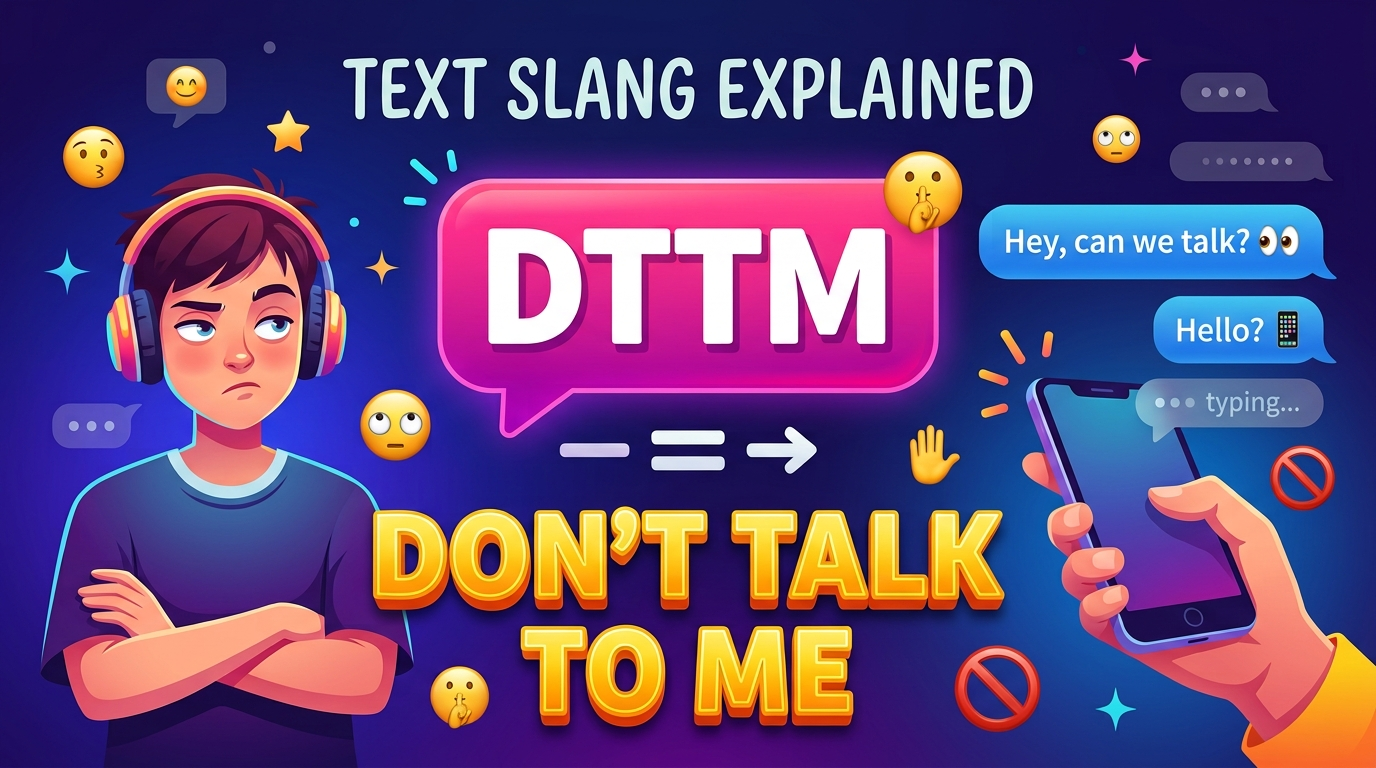
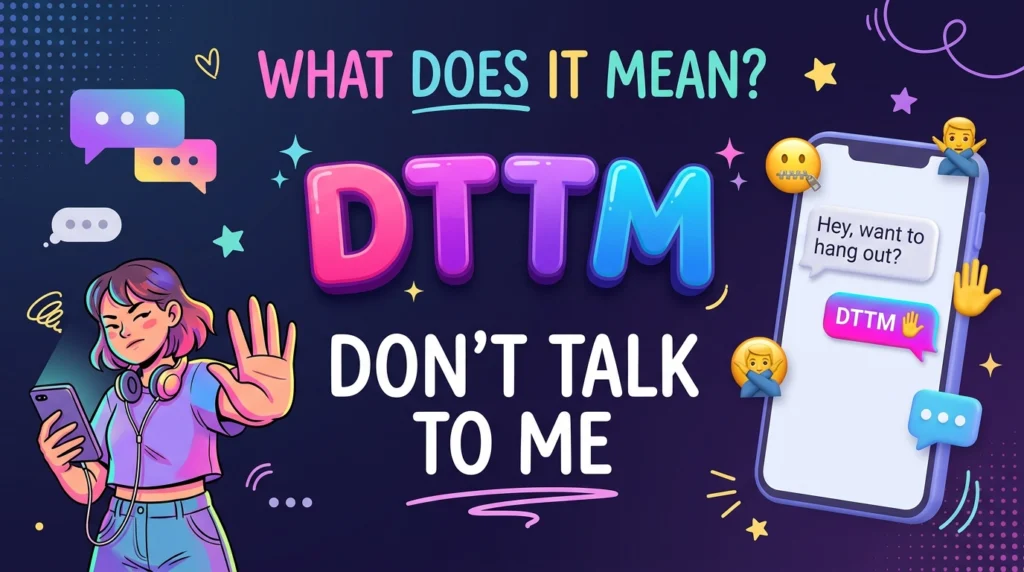
The most common DTTM meaning in text is “Don’t Talk to Me.” People use it in messages and online conversations when they feel annoyed, need personal space, want to stop a conversation temporarily, or are expressing playful frustration.
However, the meaning is not always as serious as it sounds. A friend who texts “DTTM 😂” after an embarrassing joke may be teasing you, while someone who sends “I’m upset. DTTM right now” may genuinely need space.
In this guide, you will learn what DTTM stands for, how people use it in texting and social media, what it means from a guy or girl, how to interpret its tone, and how to respond appropriately.
What Does DTTM Mean in Text?
DTTM usually stands for “Don’t Talk to Me.” It is an informal texting abbreviation used to express annoyance, frustration, embarrassment, or a desire to pause communication.
Instead of typing the complete phrase, someone can use four letters to communicate the same basic message.
Quick answer:
- DTTM: Don’t Talk to Me
- Category: Texting abbreviation and internet slang
- Typical tone: Annoyed, playful, sarcastic, or serious
- Main purpose: To ask someone to stop talking or give them space
- Best response: Respect the person’s request and consider the conversation’s context.
For example:
Person A: “I told everyone about your crush!”
Person B: “DTTM 😭”
Here, DTTM may express embarrassment or playful frustration rather than genuine anger.
Now consider a different situation:
Person A: “Can we talk about our argument?”
Person B: “Not right now. DTTM.”
In this case, the sender may be asking for time alone before continuing the conversation.
The most important thing to remember is that DTTM communicates a desire for distance, but the reason and duration depend on the situation.
What Does DTTM Stand for?
The letters in DTTM represent the words Don’t Talk To Me.
| Letter | Meaning |
| D | Don’t |
| T | Talk |
| T | To |
| M | Me |
The abbreviation is most useful in casual digital communication, where people often shorten phrases to express reactions quickly.
Although the words sound direct, the intention can vary. Someone might use DTTM to express genuine irritation, exaggerate an embarrassing moment, or playfully tell a friend to stop teasing them.
It is not a universally understood abbreviation, so a recipient unfamiliar with it may need to ask what it means.
What Does DTTM Mean in Slang?
In internet slang, DTTM is more than a shortened sentence. It can communicate an emotional reaction without requiring a detailed explanation.
Its meaning generally falls into four categories.
1. Anger or Frustration
Someone may use DTTM after an argument, an upsetting comment, or an unpleasant experience.
Example: “You keep bringing up that mistake. DTTM.”
Meaning: The person is frustrated and wants the conversation to stop.
2. Needing Personal Space
DTTM can signal that someone is overwhelmed, tired, or not ready to talk.
Example: “Long day, too many problems. DTTM for a while.”
Meaning: The person wants some quiet time.
3. Playful Embarrassment
Friends sometimes use DTTM as an exaggerated reaction to teasing or embarrassing news.
Example: “You showed my childhood pictures to everyone? DTTM 😂”
Meaning: The sender is embarrassed or pretending to be offended for humorous effect.
4. Sarcasm or Dramatic Reactions
DTTM can also be used when someone wants to dramatize a minor disappointment.
Example: “You finished the last slice of pizza? DTTM.”
Meaning: The person is mock-annoyed about the situation.
Tip: Do not judge the tone from the abbreviation alone. Look at the preceding messages, the relationship between the people involved, and any Emojis or additional words.
DTTM Meaning in Text Messages: Examples
The easiest way to understand DTTM is to see how it works in different conversations.
| Text message | Likely meaning |
| “DTTM right now.” | Please don’t talk to me at the moment. |
| “DTTM 😭” | Playful frustration or emotional embarrassment. |
| “You spoiled the ending. DTTM.” | Annoyance about a spoiler. |
| “I’m exhausted. DTTM today.” | I need rest and don’t feel like talking. |
| “DTTM after what you said.” | I am upset and need distance. |
| “Girl, DTTM 😂” | Possibly playful teasing, depending on the context. |
| “Please respect my space. DTTM.” | A more serious request to stop communicating. |
These examples illustrate common ways the phrase may be interpreted. The same message can have different meanings depending on the sender’s intention.
What Does DTTM Mean on Snapchat?
On Snapchat, DTTM usually means “Don’t Talk to Me,” just as it does in ordinary texting.
Someone might send it in a private chat, reply to a teasing Snap, or use it after an awkward conversation. The abbreviation may also appear in a caption or story as a dramatic expression of someone’s mood.
Examples:
- “You posted that ugly picture of me? DTTM 😭”
- “DTTM, I’m trying to sleep.”
- “After that prank, DTTM 😂”
The first and third examples could be playful, particularly between close friends. The second could be a straightforward request for quiet.
How to interpret it: Consider what happened immediately before the message. If the person is laughing and joking, the phrase may be lighthearted. If they sound upset or explicitly ask for space, take the request seriously.
DTTM Meaning on Instagram, TikTok, and WhatsApp
DTTM can also appear in direct messages, comments, group chats, and social media captions. Its basic meaning generally remains the same, but the surrounding context can influence its tone.
DTTM on Instagram
On Instagram, someone might use DTTM in a DM after being teased or in response to an embarrassing photo.
Example: “You really posted that without asking me? DTTM.”
This may convey annoyance about the post. If The Person seems genuinely upset, avoid assuming they are joking.
DTTM on TikTok
On TikTok, DTTM may appear in comments, videos, or reactions to funny, awkward, or frustrating situations.
Example: “When your friend tells your crush everything about you: DTTM 😭”
Here, it works as a humorous reaction to an embarrassing situation.
DTTM on WhatsApp
In WhatsApp conversations, DTTM may be used between friends, family members, or partners who communicate informally.
Example: “I’m still upset about our conversation. DTTM for now.”
This sounds more serious than a joke because it directly communicates a need for distance.
Remember that the abbreviation itself does not change meaning automatically from one platform to another. The message and relationship matter more than the app.
What Does DTTM Mean From a Guy?
When a guy texts DTTM, he most commonly means “Don’t Talk to Me.” The reason depends on the conversation and his relationship with you.
Possible interpretations include:
- He is annoyed: Something you said or did may have upset him.
- He needs time alone: He may feel overwhelmed or not want to discuss something immediately.
- He is joking: He may be teasing you after an embarrassing or funny moment.
- He wants to end the conversation temporarily: He may not feel ready to continue talking.
Example 1
You: “I told your friends about your crush.”
Him: “DTTM 😂”
This could be playful embarrassment.
Example 2
You: “Why are you ignoring me?”
Him: “I’m frustrated. DTTM right now.”
This more clearly suggests that he wants space.
DTTM alone does not prove that a Guy Likes You, dislikes you, or wants to end a relationship. Pay attention to his actual words and behavior instead of assuming his feelings from four letters.
What Does DTTM Mean From a Girl?
When a girl sends DTTM, the phrase generally has the same meaning: “Don’t Talk to Me.”
Depending on the situation, she might be joking, expressing frustration, feeling embarrassed, or asking for personal space.
Example 1
You: “I still have that embarrassing video of you.”
Her: “DTTM 😭”
She may be jokingly telling you to stop teasing her.
Example 2
You: “Can we keep arguing until you explain?”
Her: “DTTM. I need some time.”
This is a clearer request for space, and you should respect it.
Do not assume that DTTM from a girl is automatically flirting, anger, or a sign of disinterest. The surrounding conversation is a much better guide to her intention.
Is DTTM Rude or Disrespectful?
DTTM can sound rude because “Don’t Talk to Me” is a direct command. However, whether it is disrespectful depends on how it is used.
| Situation | Likely tone |
| A friend jokes after you tease them | Playful |
| Someone sends it during an argument | Irritated or serious |
| A person asks for space politely | A boundary |
| Someone uses it to insult or humiliate you | Potentially hostile |
| A person sends it with laughing emojis | Possibly sarcastic or humorous |
The phrase is not automatically an insult. Sometimes people need space and do not have the energy to explain everything immediately.
However, DTTM can hurt someone’s feelings if it is used aggressively or without explanation during a sensitive conversation.
If you need space yourself, a more considerate alternative is: “I’m upset right now, so I need some time. I’ll talk when I’m ready.”
This communicates the same general boundary without sounding unnecessarily harsh.
How to Reply When Someone Texts DTTM
The best response depends on whether the message appears serious, playful, or unclear. When someone seems genuinely upset, avoid sending repeated messages or demanding an immediate explanation.
1. If They Seem Angry
You can acknowledge their feelings without escalating the situation.
Possible replies:
- “Okay, I’ll give you some space.”
- “I understand. We can talk later.”
- “I’m sorry if I upset you. I’ll respect that.”
2. If They Are Joking
If you know the person well and the conversation is clearly playful, you can respond with humor.
Possible replies:
- “Okay, okay, I’ll behave 😂”
- “Not even one word? 😭”
- “Fine, but I’m blaming you for this.”
Only use a playful reply when you have good reason to believe the person is joking.
3. If You Are Unsure What They Mean
When the tone is unclear, a calm response is safer than assuming the worst.
Possible replies:
- “Are you serious, or Are You Joking?”
- “Okay. Let me know when you’re ready to talk.”
- “I don’t want to upset you. I’ll give you some time.”
4. If You Had an Argument
Do not try to force an immediate resolution if the other person has clearly asked for space.
Possible replies:
- “I hear you. We can discuss this when we’re both calmer.”
- “I’ll step back for now.”
- “I’m sorry things got heated. We can talk later if you’re comfortable.”
The key is to respond calmly and respect the other person’s request. If you need clarification, you can ask once without pressuring them to continue the conversation.
How to Know Whether DTTM Is Serious or Playful
Because DTTM can express several emotions, it helps to consider the complete message rather than the abbreviation alone.
| Clue | Possible interpretation |
| 😂 or 😭 after a funny exchange | Playful frustration or embarrassment |
| A recent disagreement | Genuine annoyance may be involved |
| “For now” or “I need time” | A request for temporary space |
| “Stop messaging me” | A direct boundary |
| Friendly teasing between close friends | Possibly humorous |
| Repeated requests to stop contacting them | Take the boundary seriously |
These clues are not guarantees. People sometimes use humor when they are upset, and a short message may not fully explain their feelings.
If the situation is sensitive, give the person space and wait until they are ready to communicate more clearly.
DTTM vs. DTM: What’s the Difference?
DTTM and DTM look similar, but they can mean different things in internet slang.
It most commonly means “Don’t Talk to Me.”
DTM commonly means “Doing Too Much” or “Do Too Much,” depending on how it is used.
| Abbreviation | Common meaning | Example |
| DTTM | Don’t Talk to Me | “You spoiled the movie. DTTM.” |
| DTM | Doing Too Much | “You’re DTM over a tiny mistake.” |
| DTM | Do Too Much | “Don’t DTM just to impress them.” |
The additional T in DTTM is important. Do not assume the abbreviations are interchangeable.
Also, abbreviations can have specialized meanings in particular communities, so context remains important.
Other Meanings of DTTM
Although “Don’t Talk to Me” is the common interpretation in casual texting, acronyms can have different meanings in specialized contexts.
For example, a workplace message, technical document, or scheduling system might use DTTM as an internal abbreviation. Some sources also list alternative expansions, such as “Don’t Text the Mobile,” but these should not be assumed to be the intended meaning in ordinary conversation.
If you encounter DTTM in a technical or professional setting, check the surrounding sentence or ask the sender what it means. A general slang definition may not apply.
When Should You Use DTTM?
DTTM is most appropriate in informal conversations where the other person is likely to understand your meaning.
You might use it when:
- A close friend is teasing you.
- You want to express mock frustration.
- You are reacting dramatically to an embarrassing situation.
- You need to communicate that you do not want to talk at the moment.
Avoid relying on it when:
- You are communicating with a manager, teacher, client, or unfamiliar person.
- You are discussing a sensitive relationship problem.
- The recipient may misunderstand the abbreviation.
- You need to establish a serious boundary clearly.
For professional communication, use direct and respectful wording instead. For example, “I’m unavailable to discuss this right now. I’ll follow up later” is clearer than DTTM.
People Also Ask
DTTM usually means “Don’t Talk to Me.” It is an informal abbreviation used when someone wants a conversation to stop, needs space, or is expressing annoyance or playful frustration.
The common full form is “Don’t Talk to Me.” Each letter represents a word in the phrase.
On Snapchat, DTTM generally means “Don’t Talk to Me.” Someone might use it in a Snap reply or chat to express embarrassment, frustration, or a desire for quiet.
From a guy, DTTM usually has the same meaning as in other texts. He may be joking, annoyed, overwhelmed, or asking for space. The context determines the likely intention.
From a girl, DTTM generally means “Don’t Talk to Me.” It could be playful or serious, so consider her words, the situation, and your relationship rather than assuming a particular emotion.
Conclusion
The most common DTTM meaning in text is “Don’t Talk To Me.” People use this abbreviation in text messages, Snapchat chats, Instagram DMs, TikTok comments, and other informal conversations to express annoyance, embarrassment, frustration, or a need for personal space.
However, DTTM does not always mean someone is seriously angry or wants to end a relationship. It can also be a playful reaction between friends. The surrounding conversation, emojis, and relationship between the people involved help reveal the likely tone.
If someone sends you DTTM and appears upset, the safest response is to respect their space. If the message seems playful, a lighthearted reply may be appropriate. When the intention is unclear, avoid jumping to conclusions and let the person clarify when they are ready.